Ayton Clan Crest
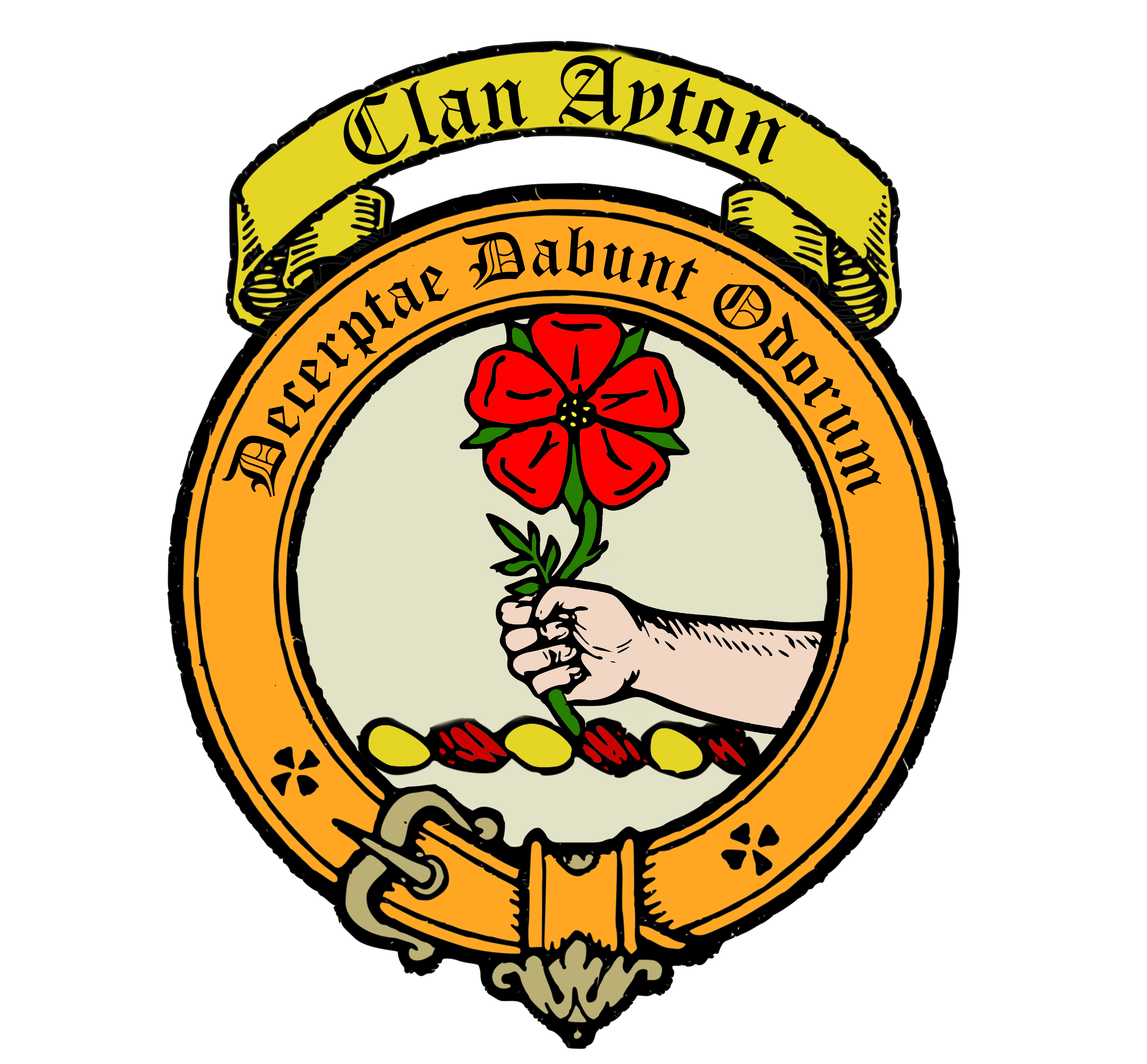 |
CREST: A hand pulling a rose Proper MOTTO: Decerptae dabunt odorum TRANSLATION: Roses plucked will give sweet smell VARIATIONS: Aiton |
| Clan Ayton, also known as Clan Aiton, is a proud part of Scottish heritage and history. The name itself is derived from the lands of Ayton in Berwickshire, Scotland, meaning “town on the banks of the River Aye”. The family can trace its roots back to an Anglo-Norman knight named Gilbert, who obtained the lands of Aiton in the 11th century and assumed the name as his designation. | |
|
Purchase @ Redbubble |
|
| Throughout its history, Clan Ayton has been known for its presence in many border disputes. There was an ancient castle at Ayton, which undoubtedly saw many battles and skirmishes. Matthew of Ayton is listed as a Scots prisoner held at Chester Castle in 1296, and the principal family ended with an heiress who married George Hume. The greater part of the family lands then passed into the Hume family. James, son of the sixth Earl of Hume, had his estates forfeited for following the Jacobite cause in the rising of 1715.
One of the most notable members of Clan Ayton was Andrew Ayton, who was listed by Macgibbon and Ross as a “Master of the Works.” He made purchases for the king, collected tax of spears in Fife, and conveyed money to the Master of Artillery. He superintended works at Stirling Castle until 1511, and according to Anderson, he was a son of the house of Ayton of that Ilk and received lands at Denmuir in Fife. Another notable member of Clan Ayton was Sir Robert Ayton, a distinguished poet and former ambassador to the German Emperor and secretary to Henrietta Maria, wife of the ill-fated Charles I. Sir Robert’s legacy as a poet and diplomat continues to be celebrated to this day. The traditional family lands are dominated by the great Castle of Ayton, which is one of the triumphs of Victorian baronial architecture. The present owner is a former Grand Master Mason of Scotland, who is proud of the connection through the land to a former Master of the King’s Works at Stirling Castle. |
|