 |
||
Crawford vs. Kennedy
|
||
|
|
||
 Delve into the past with ‘Tales of Forgotten Scottish History,’ a captivating newsletter that unveils the hidden narratives and untold stories from the rich tapestry of Scotland’s past. Unearthing forgotten heroes, enigmatic legends, and overlooked events, this newsletter brings to light the intriguing and often overlooked aspects of Scottish history. Delve into the past with ‘Tales of Forgotten Scottish History,’ a captivating newsletter that unveils the hidden narratives and untold stories from the rich tapestry of Scotland’s past. Unearthing forgotten heroes, enigmatic legends, and overlooked events, this newsletter brings to light the intriguing and often overlooked aspects of Scottish history. Each day will feature a new forgotten Story sent directly to your email, from Substack. Just $8/month or $80 for a yearly subscription, that’s just 22 cents per day for a fascinating story from Scotland’s past. Click Here to Subscribe! – Ignite your curiosity with a 7-day free trial. |
||
|
|
||
|
|
||
|
|
||
|
Clan is a lowland Scottish Clan originating in the Fife district of Scotland. The Clan was named from the a town that translates to little Stream in Gaelic. The first mention of the name Anstruther is in the 12th century when Alexander I of Scotland granted the lands of Anstruther to William de Candela, a Norman who originated in Italy. William’s and his children abandoned the surname Candela and took the name Anstruther after their granted lands. The first mention of the name being used was when William de Candela’s son became a benefactor to the monks of Balmerino Abbeey, he was named “Henricus de Aynstrother dominus ejusden in the charter that granted the monks land in the Anstruther region. In the 15th century Andrew Anstruther of Anstruther became a baron and participated in the Battle of Flodden in 1513. Read More… |
||
 The feud between Clan Crawford and Clan Kennedy emerged in the 15th century during a turbulent time in Scotland. The Clans in the Ayrshire region were known for their fierce rivalries. Some time in the mid 15th century, after a growing hatred between these two powerful Clan families over land disputes, the chief of the Kennedy Clan, Gilbert Kennedy, arrived at the Crawford stronghold of Kerse Castle and announced his intention to move a sow onto Crawford territory. He proclaimed the date would be August 1st which was a holiday traditionally known as Lammas Day in Scotland. This was an obvious provocation by the Kennedys in order to spark a clan battle between the two hated rivals.
  The feud between Clan Oliphant and Clan Ruthven appears to have begun in 1562 with the killing of James Roise by individuals connected to Lord Oliphant. The perpetrators of this killing included Peter Oliphant of Turingis, John Oliphant and Lawrence Oliphant along with eight other of their Clansmen. James Roise was the son of Thomas Roise of Maitland who was a high ranking member of clan Ruthven. Up to this point the Ruthven Clan held considerable sway over the actions and decisions of the Olphiants, this killing may have been a reaction to an evolving dynamic between these two Clans.
|
|
|
327 Scottish Clan Crests |
|
|
| Armstrong vs. Graham
|
|
|
| Agnew vs. Douglas
|
|
|
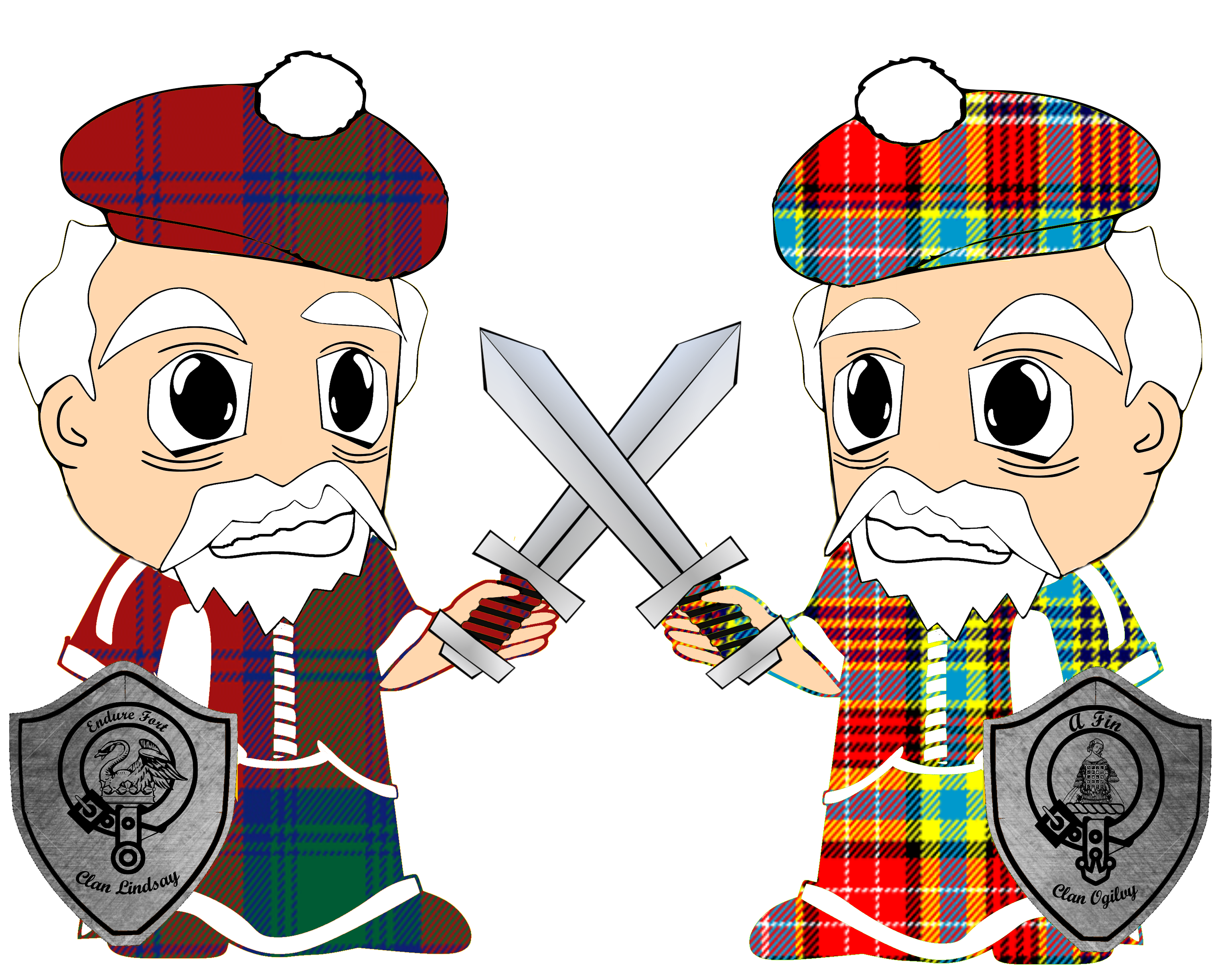 Lindsay vs. Ogilvie Lindsay vs. Ogilvie
In the 1440’s the monks of the Abbey of Abroath, located in Angus Scotland, appointed Alexander Lindsay, Master of Crawford and the chief of Clan Lindsay to the position of the Bailie of Regality. This position gave Alexander a lot of power in the Angus district, he was tasked with dispensing justice and authority. Lindsay quickly lost favour with the Abroath Monks due to the fact that he was using the abbey to quarter his men, many who were boisterous and were disturbing the peace of the solemn monks. Lindsay was also accused of embezzling large sums of money and using his wild temperament to bully his rivals. Read More… |
|
|
| Tweedie vs. Fleming
|
|
|
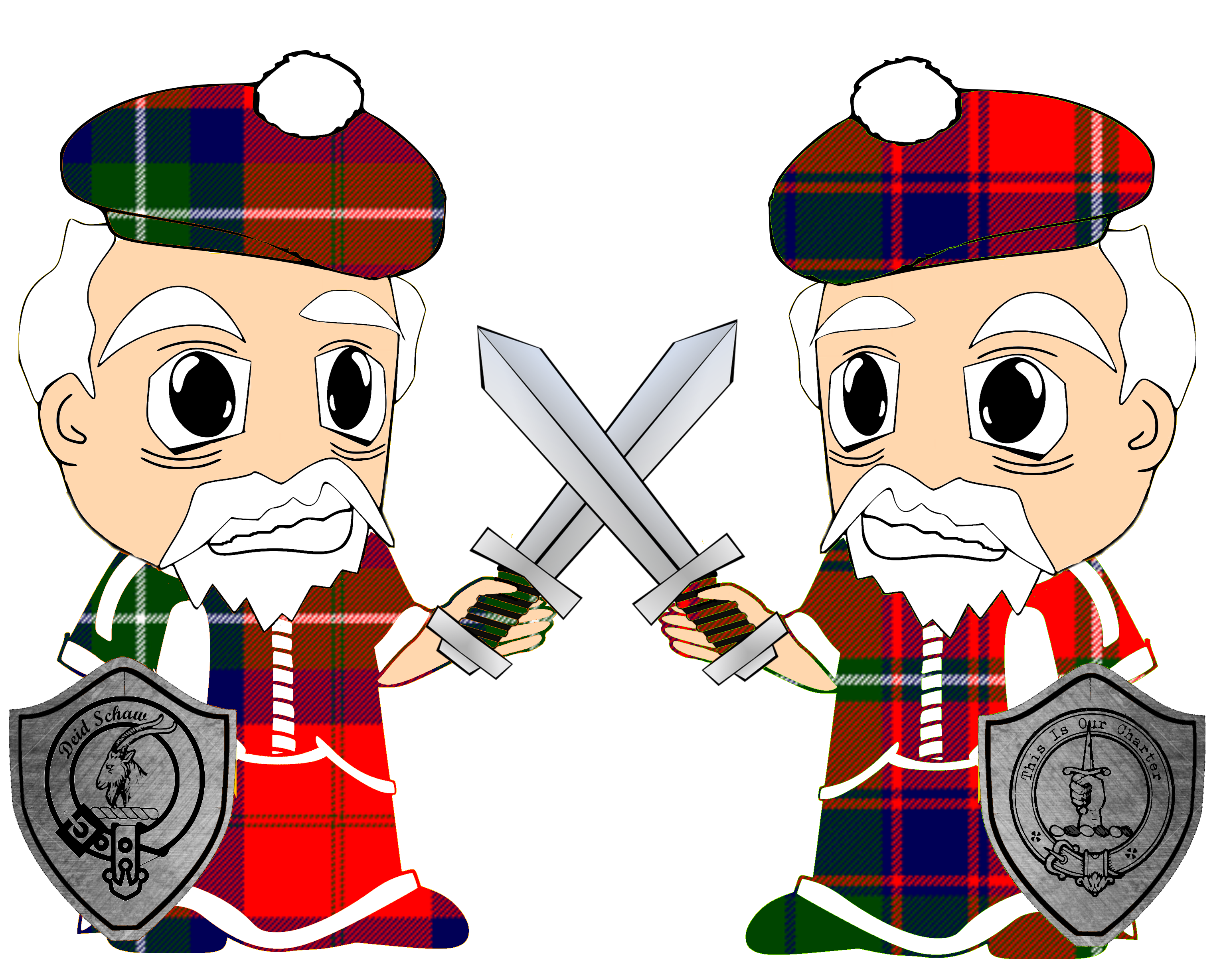 Ruthven vs. Charteris Ruthven vs. Charteris
In the early 16th century a rivalry between Clan Ruthven, a protestant family, and Clan Charteris, a Catholic one, took place over the position of provost in the Scottish town of Perth. The Provost was the chief magistrate of a Scottish burgh and held great powers within the region. The Charteris family traditionally were elected to the position, going back to the mid fifteenth century, and spanning over at least 4 generations. In 1529 Lord William Ruthven was elected to the position and this stoked an already simmering rivalry between these two powerful families. A few months after John Ruthven took over as Provost, Patrick Charteris, the previous provost, his brother John Provost and eleven of their clansmen raided the Ruthven stronghold of Cowsland where they burned the village and carried off the Ruthven’s cattle and goods. The Scottish authorities attempted to capture Patrick Charteris but he was able to escape and left Scotland for an “overseas pilgrimage”. Nine years later in 1538 John Charteris of Kinfauns was elected Provost, returning the title back to the Charteris family. Read More… |
|
|
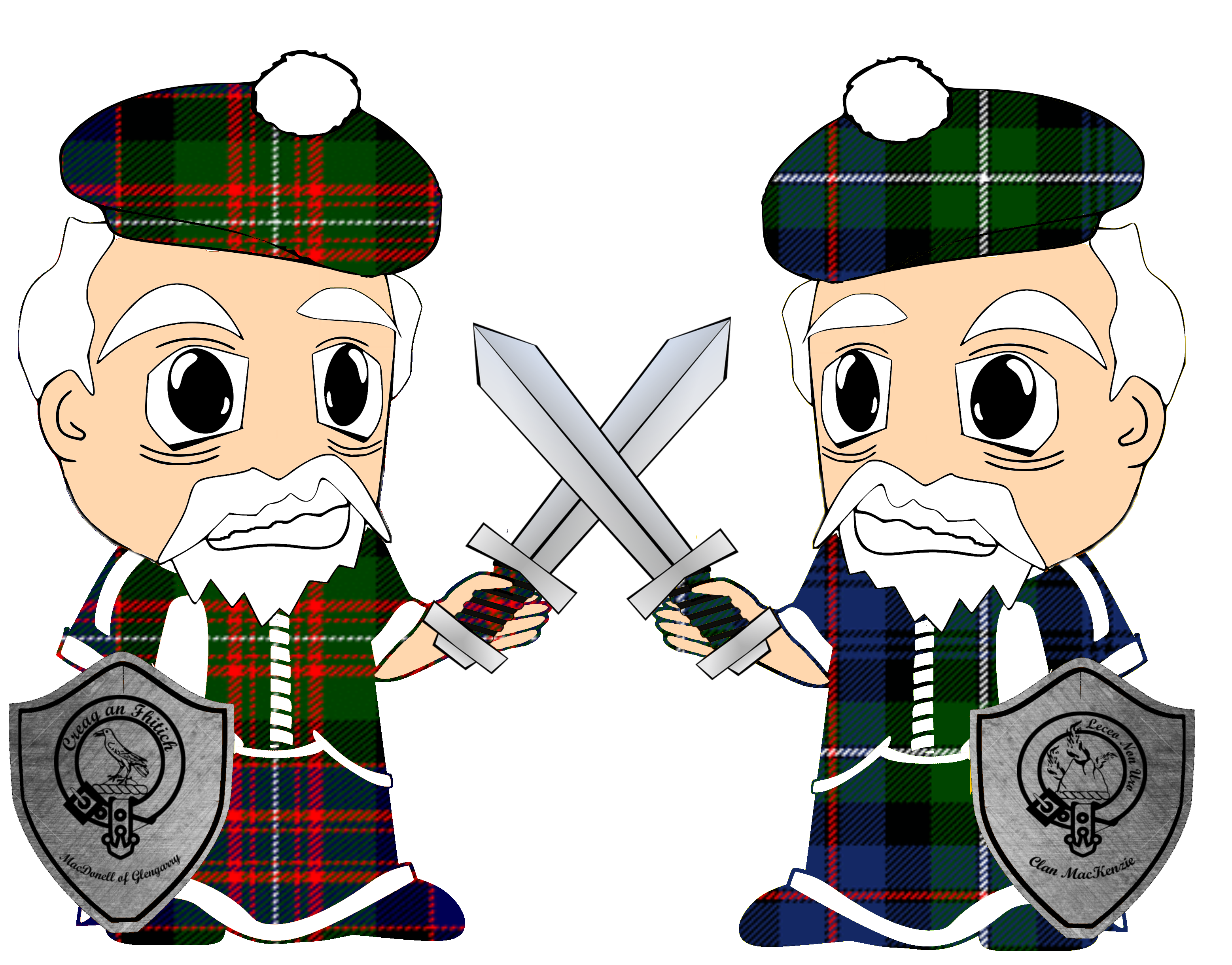 Macdonell of Glengarry vs. Mackenzie Macdonell of Glengarry vs. Mackenzie
A feud between the Macdonell’s of Glengarry and Clan Mackenzie began in the late 16th century due to several land disputes that arose after the chief of Macdonell inherited properties in Wester Ross. these properties bordered lands already occupied by the clansmen of Mackenzie. To maintain his dominance in the region the MacKenzie Chief relocated along with a small garrison of men to the property boarder. The feud ignighted when two members of the Glengarry clan sought revenge on the man who had murdered their father, they burned this mans house down killing him and his family. Unbeknownst to the Macdonell’s, Donald Mackenzie, a member of the Mackenzie Clan was staying in the house and was also killed with the murderer. The MacKenzie chief, Kenneth Mackenzie went to the Privy Council in Edinburgh to present his complaints against the Macdonell’s, as evidence he provided Donald’s charred shirt covered in blood. The Macdonell chief realizing he was going to face penalties, fled Edinburgh, further escalating the tension between the two clans. Read More… |
|
|
| Clan MacIver
Clan MacIver or Clan Iver is a highland Scottish Clan originating in Glen Lyon Scotland, but settled in the Argyll region. The Clan’s name is believed to have been of Gaelic origin and may have originated as a Norse first name. The first record of the MacIver surname was a Malcolm McIuyr who appeared on a local census of Argyll in 1292. Legend states that the MacIvers were descended from Duncan, Lord of Lochow which would make them common descendants with Clan Campbell. The MacIver’s were considered a very large and powerful clan in Scotland until the battle of Bealligh-ne-Broig in 1452 where their clan was almost entirely wiped out. Read More… |
|
|
| MacGregor vs. Drummond
In 1589 John Drummond-Ernoch was a royal forester in the forest of Glenarty, S |
|
|
|
|
|
|
|
|
|
|
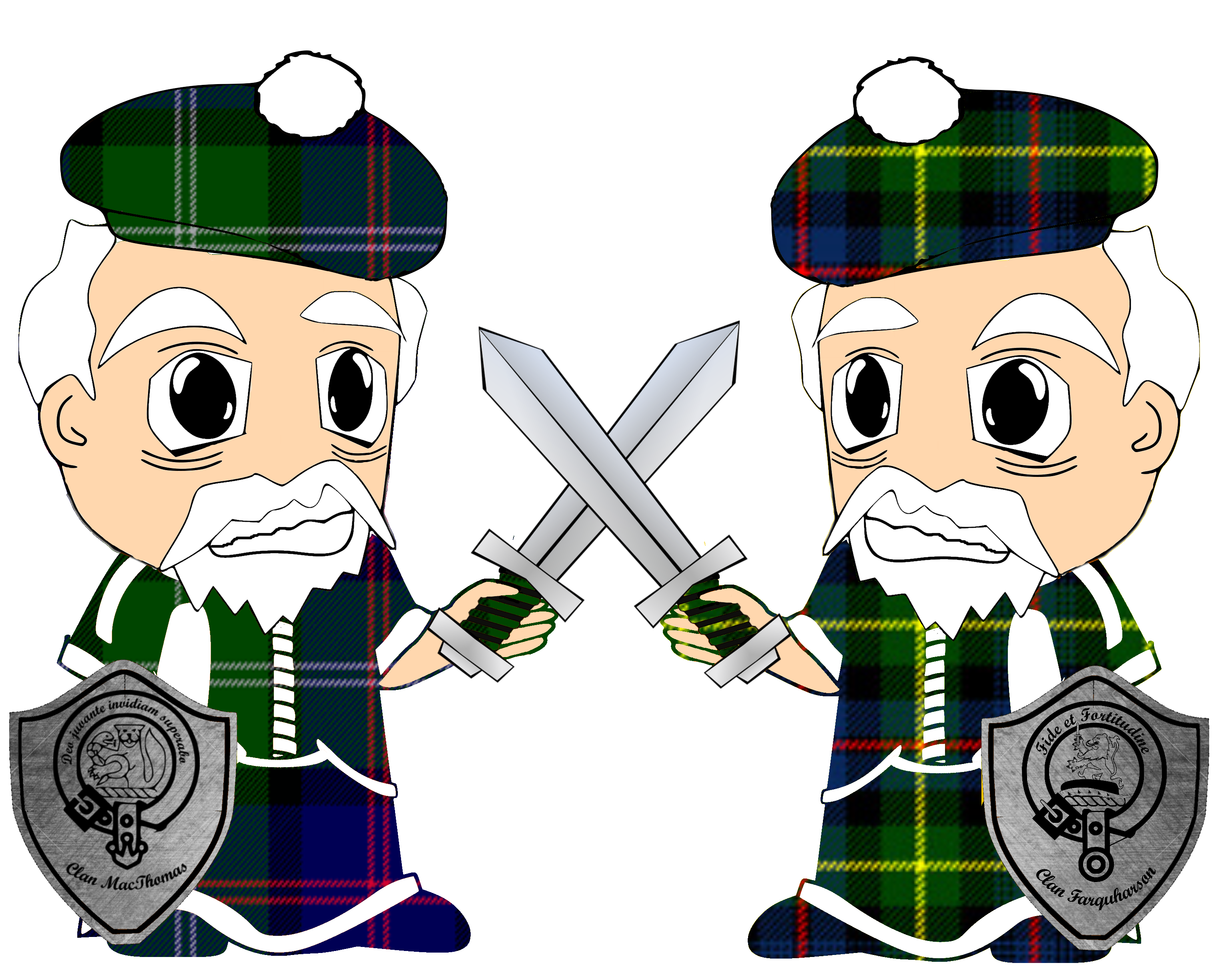 MacThomas vs. Farquharson MacThomas vs. Farquharson
In the year 1600 Robert MacThomas of Clan MacThomas was murdered by a group of highland outlaws. A few short years later Robert’s widow married Alexander Farquharson of Allanquoich. John Farquarson of Tullcairn, Alexander’s brother, also married Robert’s only daughter, Elspeth. Through these marriages the Farquharson Clan laid claim to the MacThomas lands in Glenshee. Obviously this land grab infuriated members of the MacThomas Clan who saw these marriages as a way to steal their property. This was the first act of many encroachments by the Farquharson clan against the MacThomas’s of Glenshee. Read More… |
|
|
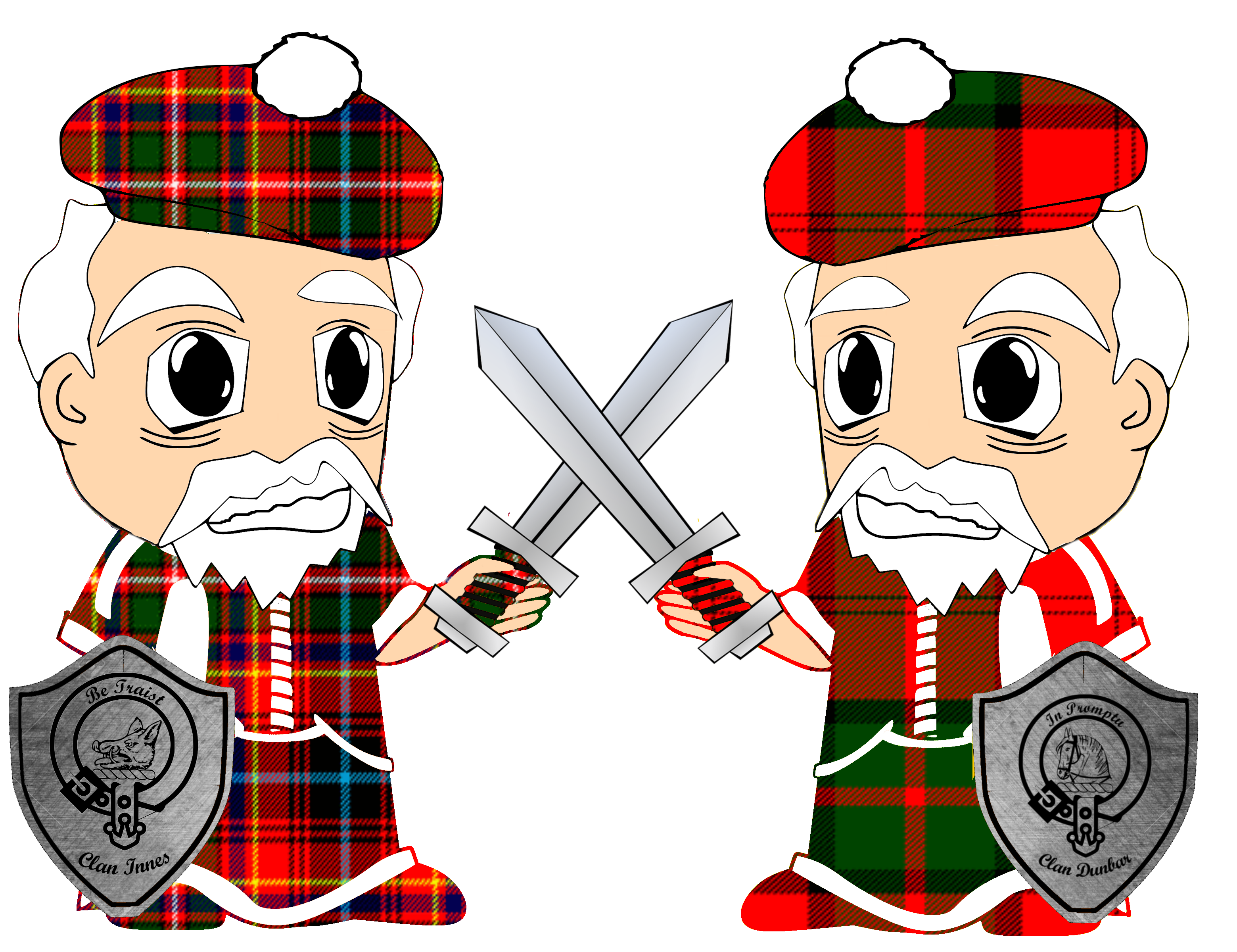 Innes vs. Dunbar Innes vs. Dunbar
The feud between the Innes’s and the Dunbar’s was at its peak in the 16th century and got so bad that the citizens of Aberdeen had petitioned the crown to step in and end the feud. The first incident on record between these two clans took place on New Years Day of 1554. One hundred Clan Innes men descended on the Cathedral of Elgin during Vespers or evening prayer with the intent of killing Alexander Dunbar, the Prior of Pluscarden and David Dunbar, the Dean of Moray. The Dunbar’s also brought seventy fighting men, led by James Dunbar, with the specific intent of slaying William Innes and his clansmen. According to accounts of the time, it was a very bloody and violent clash that took place inside the Elgin Cathedral with neither clan having the upper hand. This was considered a very exceptional incident for the time, it was known as “the Bloody Vespers”, due to the fact that the battle took place during a church service. Read More…. |
|
|
| Morrison Vs. MacAulay
|
|
|
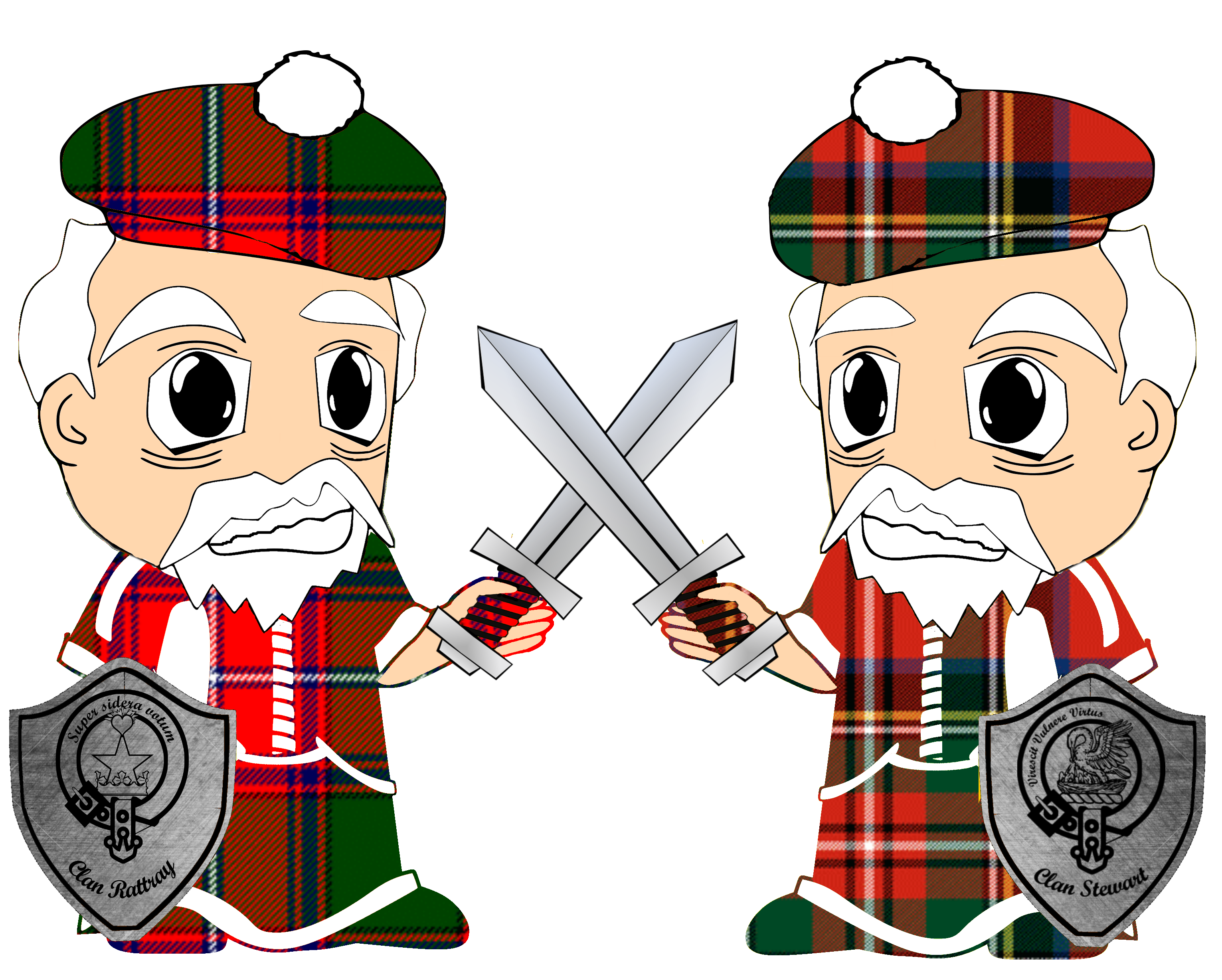 Rattray vs. Stewart of Atholl Rattray vs. Stewart of Atholl
In 1463 Sir Silvester Rattray, who was at the time a Scottish ambassador to England, inherited large estates around Craighill, Scotland. These estates were coveted by their powerful neighbour, Stewart, Earl of Atholl who wanted to expand his holdings in the area. Silvester was succeeded by his son, John Rattray, who with his first wife, had a son and two daughters, before she passed. John’s son unfortunately died at a young age, serving as a professional soldier in the Netherlands. His oldest daughter Grizel married John Stewart, Earl of Atholl, who quickly claimed half of the barony in her name and encouraged his sister-in-law to also make her claim on the land. However, John Rattray, was a very resilient man for the time and maintained control of his lands as an aging widower. Then at the age of 60 years old, John took a second wife by with whom he had two more sons and a daughter. Read More… |
|
|
Scott vs. Eliott
|
|
|
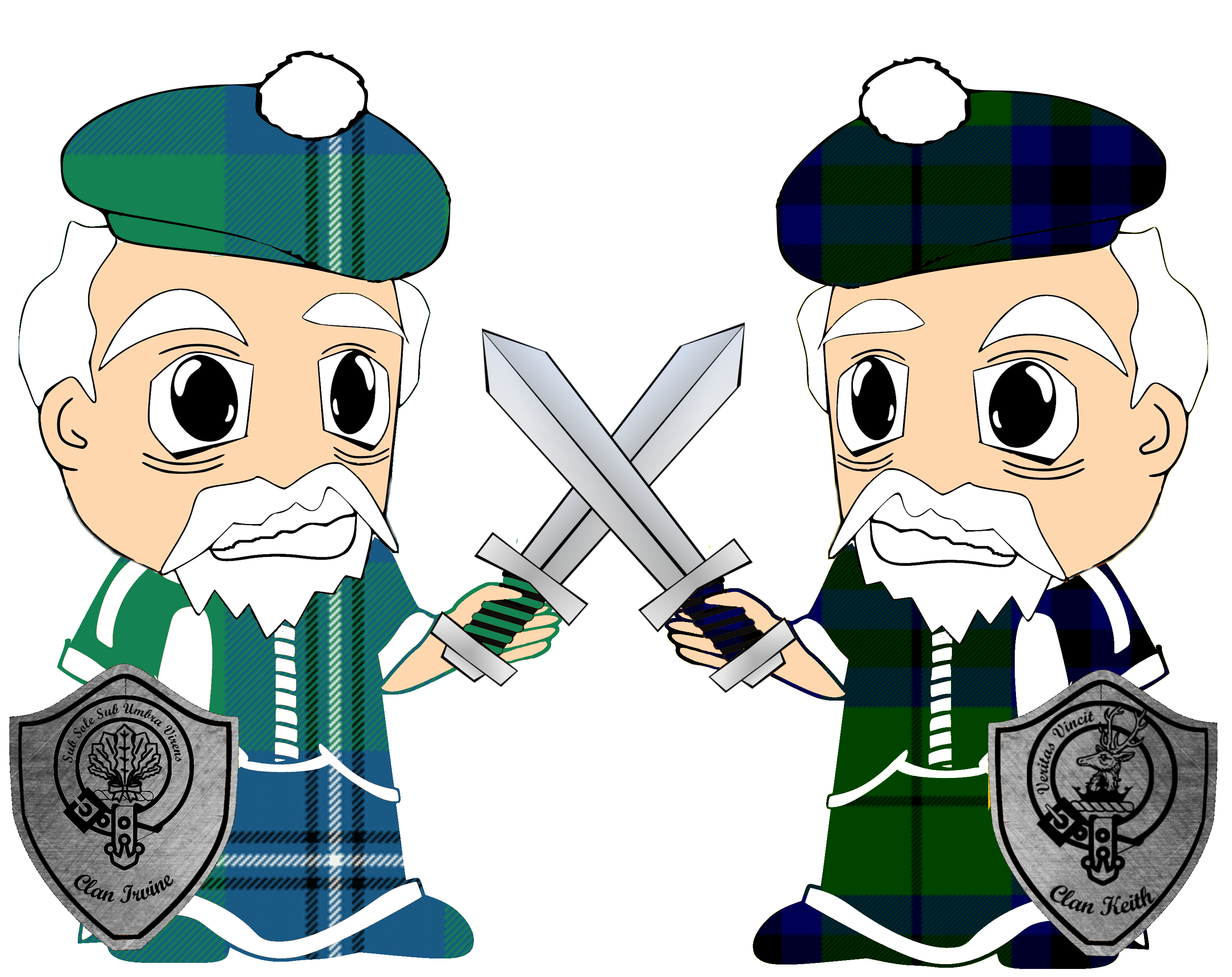 Irvine vs. Keith Irvine vs. Keith
The Origin of this feud can be traced back to 1346 when Sir John Keith died during the battle of Durham. John was Sir Robert Keith, Marischal of Scotland’s, only son and heir to his estates. When Sir Robert Keith died in the Same year his titles and lands were inherited by his brother, Sir Edward Keith. One of John’s daughters was married into the Chief of the Irvine of Drum’s family. The Irvine’s took this opportunity to claim the estates of Strachan as their own, this did not sit well with Edward Keith. According to early accounts, the feud became so nasty that the Keith’s, at one point, burnt a captured Irvine child to death in hot wart. In response the Irvines of Drum allegedly marched on Hallforest Castle in Kintore, Aberdeenshire, a stronghold that was granted to the Keith’s in the 14th century by Robert the Bruce. The Irvines set fire to the castle and destroyed much of the Keith’s property as they marched back to their own lands. Read More… |
|
|
Grant vs. Gordon |
|
|
MacIver vs. Gunn
|
|
|
Macfarlane vs. Colquhoun
|
|
|
Munro vs. MacKenzie
|
|
|
MacNab vs MacNeish
|
| Clan MacNicol
Clan Nicolson or Clan MacNicol or Clan MacNeacail is a highland Scottish Clan originating on the Isle of Skye. MacNicol is a Viking-Scottish patronymic name that is derived from Nicolson, which in turn was derived from the Greek Nikolaos, which means conqueror of the people. It is believed that the MacNicol’s held lands at Scorrybreac on the Isle of Skye since the middle of the 11th century. The first recorded use of the name was by John “mak Naky” who was recorded as a supporter of Edward I during the Scottish Wars of Independence in the 14th century…Read More |
|
|
 |
|
|
|
|
| Clan MacAlister
The Clan Macalister is a highland Scottish clan originating in the Kintyre District. The are considered to originally be a branch of Clan Donald. The progenitor of the clan is believed to be MacAlister of Loup and Kennox, a descendant and possibly a son of Alister Mhor , Lord of the Isles. The clan can trace its roots back to the late 13th century and opposed Robert the Bruce in his claim to the Scottish throne. The surname MacAlister is an anglicized version of the Gaelic surname “MacAlasdair”, meaning son of Alasdair. They became their own independent clan in the 15th century under the leadership of Chief Ian Dhu…Read More |
|
|
| THE SCOTTISH CLANS AND THEIR TARTANS BY W. & A. K. JOHNSTON, LIMITED, 1866
|
| Clan Muir or Clan Moore
Clan Muir or Clan Moore is a lowland Scottish Clan originating in the East Ayrshire district of Scotland. The surname muir in Scotland possibly derived from the Gaelic term mòr which means “of great size” and may refer to a person of great importance. The origin of the clan is believed to originate as far back as 374 AD when Fergus Mor of Ireland invaded Scotland and defeated the |
|
|
| Clan Ramsay
|
|
|
| Clan MacAulay
Clan MacAulay is a highland Scottish clan originating in the Argyll district of Scotland. The MacAulay surname is translated from the Gaelic name MacAmhalghaidh which means son of Amalghaidh. The clan considers itself one of the Siol Alpin Clans, which is a group of seven clans that claim to be descended from Kenneth MacAlpin, father of Cináed mac Ailpín , King of the Picts (844-860). Others believe that the clan was originally descended from the Earls of Lennox whose family had contained several individuals who were given the surname Amhlaibh. The Earl of Lennox was a title that may have been created as early as 1154 by King Malcolm IV, for the rulers of the Lennox district of Scotland. Read More… |
|
|
| Clan Dundas
Clan Dundas is a highland Scottish Clan originating in the West Lothian district of Scotland. The surname Dundas was derived from the town of Dundas located near Edinburgh. The placename is Gaelic in origin and translates into “a fort south”. It is believed that the Dundas family in Scotland extends back to the 12th century when Helias, son of Uctred, received lands in West Lothian from then king, Malcolm IV. The first recorded use of the surname Dundas comes from a deed signed in the late 12th century by Serle de Dundas. Read More… |
|
|
| Clan Irvine
Clan Irvine or Clan Irving is a lowland Scottish Clan originating in the Ayrshire region of
Scotland. The surname Irvine was derived from the name of the town of Irvine, located in Ayrshire. Irvine is a Welsh term that means Green or fresh river. The first recorded evidence of the surname was from Robertus de Irvine who owned a barony in the 13th century, where the town of Irvine currently sits. It is believed that the Irvine family may have been descendants of the early Celtic monarchs of Scotland and were settled between the River Esk and the River Kirtle sometime after 1018. Read More… |
|
|
| Clan MacQuarrie
Clan MacQuarrie is a Highland Scottish Clan originating in the Inner Hebrides of Scotland. They are considered to be one of the Siol Alpin clans, which is a group of seven clans that claim to be descended from Kenneth MacAlpin, father of Cináed mac Ailpín , King of the Picts (844-860). The surname MacQuarrie is an angelized version of the Gaelic name Mac Guaire, which means “proud” or “noble”. It is believed that the progenitor of the clan was Guaire, the brother of Fingon, the progenitor of the MacKinnon Clan. Read More… |
|
|
| Clan MacFie
Clan Macfie is a Highland Scottish Clan originating in Colonsay, Scotland. The clan considers itself one of the Siol Alpin Clans, which is a group of seven clans that claim to be descended from Kenneth MacAlpin, father of Cináed mac Ailpín , King of the Picts (844-860). The surname MacFie is derived from the Gaelic name Mac Dhuibhshíthe which in tern means son of Dhuibhshíthe. Dhuibhshíthe can be translated into English as “black peace”. It is believed that the MacFie family gained control of the Island of Colonsay sometime before the 13th century and controlled the island at the discretion of the Lord of the Isles. Read More… |
|
|
| Clan MacBeth
Clan MacBeth is a Highland Scottish Clan originating in the Angus region of Scotland. The legendary ancestor of the Clan was MacBeth, King of Scotland from 1040 – 1057 and was made famous in Shakespeare’s play, MacBeth. The surname MacBeth is derived from the Gaelic term MacBheatha mac Fhionnlaigh which in english translates into Macbeth son of Findlay. The surnames Beaton an Bethune are thought to be of the same family as MacBeth’s with Beaton being considered an anglicized version of MacBeth. Read More… |
|
|
| Clan MacEwen
Clan MacEwen is a highland Scottish clan originating in the Argyll and Bute district of Scotland. The clan claims to be descended from a prince of the Irish O’Neil dynasty who settled in Kintyre in the 11th century. The surname MacEwen is derived from the Gaelic term MacEoghainn, which translates into “the son of Eoghann”. The first record of the surname MacEwen shows up as a witness to a charter in 1174 by Malcolm II, Earl of Atholl. Read More… |
|
|
| Clan Rose
Clan Rose is a highland Scottish Clan originating in the Inverness-shire area of Scotland. The Roses can trace their heritage back to a Norman Knight, named deRos, who emigrated to Scotland in the 13th century along with other families who came over after the Norman conquest. The progenitor of the clan is considered to be Hugh of Kilravock who established his home at Kilravock in 1280 after marrying Mari de Bosco and uniting these two families. Read More… |
|
|
| Clan MacKinlay
Clan MacKinlay is a Highland Scottish Clan originating in the Lennox District of Scotland. The name MacKinlay is derived from the Gaelic name MacFhinnlaigh which translates into “Son of Fair Hero”. The
oldest account of the family is from the Buchanan of Auchmar in 1723 who stated that the family descends from the Buchanan’s of Drumkill. According to the Scottish Council of Clans the Mackinlay family also has hereditary relationships with Clan MacFarlane, Clan Farquharson and Clan Stewart of Appin. It is believed that a man named Finlay first settled near Callander, Perthshire in the year 1600. He had several sons who were the first to adopt the surname MacKinlay. Read More… |
|
|
| Clan MacRae
Clan MacRae is a Highland Scottish Clan iginating in the Wester Ross District of Scotland. The surname is derived from the Gaelic name MacRaith that means “son of grace”. It
|
|
|
| Clan Skene
Clan Skene is a lowland Scottish Clan originating in the Aberdeenshire district of Scotland. It is believed that Skene is derived from the Gaelic word Sgian which means dagger or knife. There is a legend that the younger son of the chief of clan Robertson saved the life of the king from a wolf with nothing more than a knife. He was rewarded with the lands of Aberdeenshire and his family took the name of Sgian or Skene to honour their accomplishment. A more common belief is that the family took its name from the lands of Skene. The first recorded use of the name was John de Skene who forfeited his lands in the 12th century when he supported Donald Bane against Malcolm III of Scotland. Read More... |
|
|
| Clan MacQueen
Clan MacQueen or Clan Revan is a highland Scottish Clan originating on the Isle of Skye in Scotland. It is believed that the MacQueen were originally descended from Clan MacSween who controlled the lands of Knapdale in the 13th century . In the 15th century, they were tasked with providing protection for the daughter of the chief of Clan MacDonald of Clanranad, Mora MacDonald. Upon the marriage of Mora to the chief of clan MackIntosh, Calum Beg Mackintosh, 10th of Mackintosh, Roderic mac Milmor vic Swen, of Clan MacQueen (at the time a branch of MacSween) settled in Corrybrough, Strathdearn and joined the Chattan Confederation, led by the Macintoshes. The Chattan Confederation an organization, that unites twelve separate clans under a superior chief, for the purpose of mutual solidarity and protection. Read More… |
|
|
| Clan Crawford
Clan Crawford is a lowland Scottish Clan originating in Renfrewshire, Scotland. The surname Crawford is deri |
|
|
Clan MacAlpineClan MacAlpin or Clan MacAlpine is a highland Scottish Clan originating in Argyll and Bute, western Scotland. According to Scottish tradition Clan MacAlpine is considered to be the oldest and most purely
Celtic of the clans. The clan claims to have been descended from Kenneth Alpin, the first king of Scotland, who united the Picts and the Scots in the year 850. The surname MacAlpin is derived from the term for the son of the blond one or the son of Alpin. Seven other clans also claim to be descendants of King Alpin and are collectively referred to as Siol Alpin. These clans are, Clan Grant, Clan Gregor, Clan MacAulay, Clan Macfie, Clan Mackinnon, Clan Macnab, and Clan MacQuarrie. Read More…
|
|
|
The Top Ten Brutal Scottish Clan MassacresNumber 10 – Massacre at the Battle of Champions, 1464 After many Gunn’s and Keith’s were lost in a 40 year feud between the two clans, George Gunn, the chief of the Gunn Clan looked to settle it by challenging the Keith Clan to a “battle of champions”. Gunn proposed that each clan would be allowed to bring it’s 12 best men on horseback to meet and settle the feud in battle. The Gunn’s arrived first and went to a chapel to wait. When the Keith’s had arrived the Gunn’s realized they were deceived, they had showed up with two men on each horse. By the time the Gunn’s realized, it was too late, they were slaughtered. Five of the Gunn’s men were able to escape and hid by a stream in upper strathnaver, and planned their revenge. This group followed the Keith’s to their castle and took advantage of a Keith’s victory celebration by killing the Keith Clan chief with an arrow. Read More… |
|
|
Clan MacNaghtenClan Macnaghten also known as Clan MacNachten, Clan MacNaughton or Clan McNaughto |
|
|
Clan MacGillivray
Clan MacGillivray is a highland Scottish clan originating on the Isle of Mull, Scotland. It is believed that the MacGillivray’s were around in the late 12th century during the rein of King Somerled, Lord of the Isles. The surname MacGillivray translated from Gaelic means “Son of the Servant of Judgment”. They were associated with the Macleans of Mull in the early folklore of the Western Scottish Islands. Read More… |
|
|
|
|
| Clan Crosbie/Clan Crosby
Clan Crosbie or Clan Crosby is a lowland Scottish Clan originating in Annandale, Dumfries and Galloway, Scotland. The surname Crosbie is of Norman descent, John De Crosby arrived in England after the Norman conquests in 1066 and was granted lands along the Mercer River in England. John’s third son Adam received a land grant in Annandale, Scotland and his daughter Emphemia married a young Robert the Bruce. This marriage cemented a family alliance between the Crosbie clan and the Bruce clan. Many historians view the Crosbie’s as a sept of the Bruce’s however the Lord Lyon considers them to be a separate armigerous clan. The surname Crosbie may have been derived from the Old Norse term meaning one who lived near a cross on a farm. Read More… |
|
|
Clan Glendinning
Glendinning is a lowland Scottish Clan originating in the historic Dumfriesshire County of Scotland. The surname Glendinning is derived from the lands of that name. The progenitor of the clan is considered to be William Douglas, the second son of the 1st Lord Douglas. Due to the close ties with the Douglas Clan many consider Glendinning to be a sept of that clan. The Lord Lyon King of Arms considers Glendinning to be a separate armigerous clan, meaning it does not presently have a chief. Read More… |
|
|
Clan Young
Clan Young is a clan of the Scottish Boarders originating in East Lothian, Scotland. The surname Young is believed to be of Anglo-Saxon origin and was derived from the Middle English word yunge, which means the “young one”. The first mention of the Young family in Scotland appeared in Dumbarton where Malmore and Ade Young, were listed as residences. In 1605 Peter Young of Easter Seton was Knighted by James VI of Scotland. Read More… |
|
|
| Clan Carruthers
Clan Carruthers is a Lowland Scottish clan originating in the County of Dumfries, Scotland. The surname Carruthers was derived from the name of an ancient British fort named Caer Rydderch. The Carruthers family acquired their lands in the 12th century. The first person with the surname Carruthers on record was William of Carruthers who in the early 11th century was listed as making a donation to Newbattle Abbey. Read More…. |
|
|
|
|
|
|
Mackay Vs. Sutherland
|
|
|
Clan MacInnes
Clan MacInnes is a highland Scottish clan originating in the Argyll district of Scotland. The surname MacInnes is derived from the Gaelic name MacAonghais which translates into the sons of Angus. The legendary progenitor of the clan is believed to be Oengus or Angus who lived in the 4th century and was of indigenous Pictish descent. In the 9th century the clan left the western isles of Scotland and settled in Morvern, Argyll. This move was most likely caused by viking raids. Read More… |
|
|
Clan Feuds – Mackay vs. Ross
|
|
|
Clan Colville
Clan Colville is a lowland Scottish Clan originating in the Roxburgshire district of Scotland. The surname Colville is thought to be of Norman descent derived from the town of Colville in Normandy. The first mention of the name Colville is as a witness to a charter in 1159. Philip de Coville is the progenitor of the Colville Clan. Phillip was granted properties in Roxburghshire and Ayrshire in the late 12th century. In 1219, Thomas de Colville acquired the barony of Kinnaird in Stirlingshire Scotland, this became the seat of the clan. Read More… |
|
|
Clan Feud – Kerr vs. Scott
|
|
|
Clan Feud – Cameron vs. Mackintosh
|
|
|
Clan Boyle
Clan Boyle is a lowland Scottish Clan originating in the North Ayrshire district of Scotland. The surname Boyle derives from the Gaelic surname O’ Baoighill, which means the male descendant of the rash one. The first recorded use of the Boyle name in Scotland was by David de Boivil who appeared on a charter as a witness. The Boyle family acquired their land holdings in Kelburn, North Ayrshire in the 12th century. Read More… |
|
|
Clan Feud – Buchanan vs. MacLaren
|
|
|
Clan Feud – Boyd vs. Stewart
|
|
|
Clan Feud – MacDonald vs. MacLeod
This feud started in 1577 when three young members of the MacLeod Clan became stranded on the Island of Eigg, among members of the MacDonald of Clanranald clan. The three men were welcomed by the MacDonalds until they became aggressive towards some of the MacDonald women. The three were beaten and set out to sea. Word spread to the chief of Clan MacLeod about the treatment of his three clansmen. Enraged, the Macleod chief gathered up a group of his men and headed to Eigg to seek revenge. Read More… |
|
|
Clan Barclay
Clan Barclay is a lowland Scottish Clan originating in the Aberdeenshire district of Scotland. The surname Barclay is based on the location name Berkely in Gloucestershire. The name in Old English means “woodland clearing”. It is believed that Roger de Berchelai was the first member of the family to come to England, arriving with William the Conqueror in the 11th century. In 1069 Roger moved to Scotland and was granted the lands of Towie in Aberdeenshire. Read More… |
|
|
MacDonald of Clanranald vs. Fraser of Lovat
|
|
|
Clan Feud – Gunn vs. Keith
|
|
|
Clan Craig
Clan Craig is a highland Scottish Clan originally located in Aberdeenshire, Scotland. The surname Craig is derived from the Gaelic term creag which means “rocky hill”. John of the Craig is the first of the Craig family mentioned on record when he led a band of 300 men into the Battle of Culblean in 1335. John of Craig was considered the Laird of the Craig of Auchindoir. William Craig of Craigfintray, who was born in the 15th century is the oldest known chief of the clan. Read More… |
|
|
Clan Feud – Drummond vs. Murray
|
|
|
Clan Arthur/Clan MacArthur
Clan Arthur or Clan MacArthur is a highland Scottish Clan originating in the Argyll District of Scotland. The surname Arthur is derived from the Gaelic term Artuir, meaning bear or bear man. The Arthur’s and the Campbell’s share a common origin. The early Arthur chiefs even challenged for the leadership of the Campbell Clan. The Arthur family sided with Robert the Bruce during the War of Independence and received a large amount of the MacDougall Clan’s forfeited territory after Bruce’s victory. Read More… |
|
|
Maxwell vs Johnstone
|
|
|
Clan Moffat
Clan Moffat is a clan of the Scottish borders originating in the Dumfriesshire district of Scotland. The surname Moffat is a place-name that evolved from the Gaelic terms magh, meaning field, and fada, which means long, therefore the name means long field. The progenitor of the clan is William de Movat who was a land owner and chief in the town of Moffat. The Moffat’s were supporters of Robert the Bruce and therefore were granted charters that gained them lands in the barony of Westerkirk in 1300. Read More… |
|
|
Clan Feud – Montgomery vs. Cunningham
|
|
|
Clan Feud – Campbell vs. Sinclair
|
|
|
Clan Feud – Gordon Vs. Forbes
|
|
|
Clan LoganClan Logan is considered a highland and lowland clan originating in Ayrshire, Scotland. The surname Logan is a territorial name derived from the place name Logan. The first recorded use of the surname is Robert Logan who in 1204 was a witness to a property document. Le Walte |
|
|
Clan Feud – MacGregor vs. Colquhoun
|
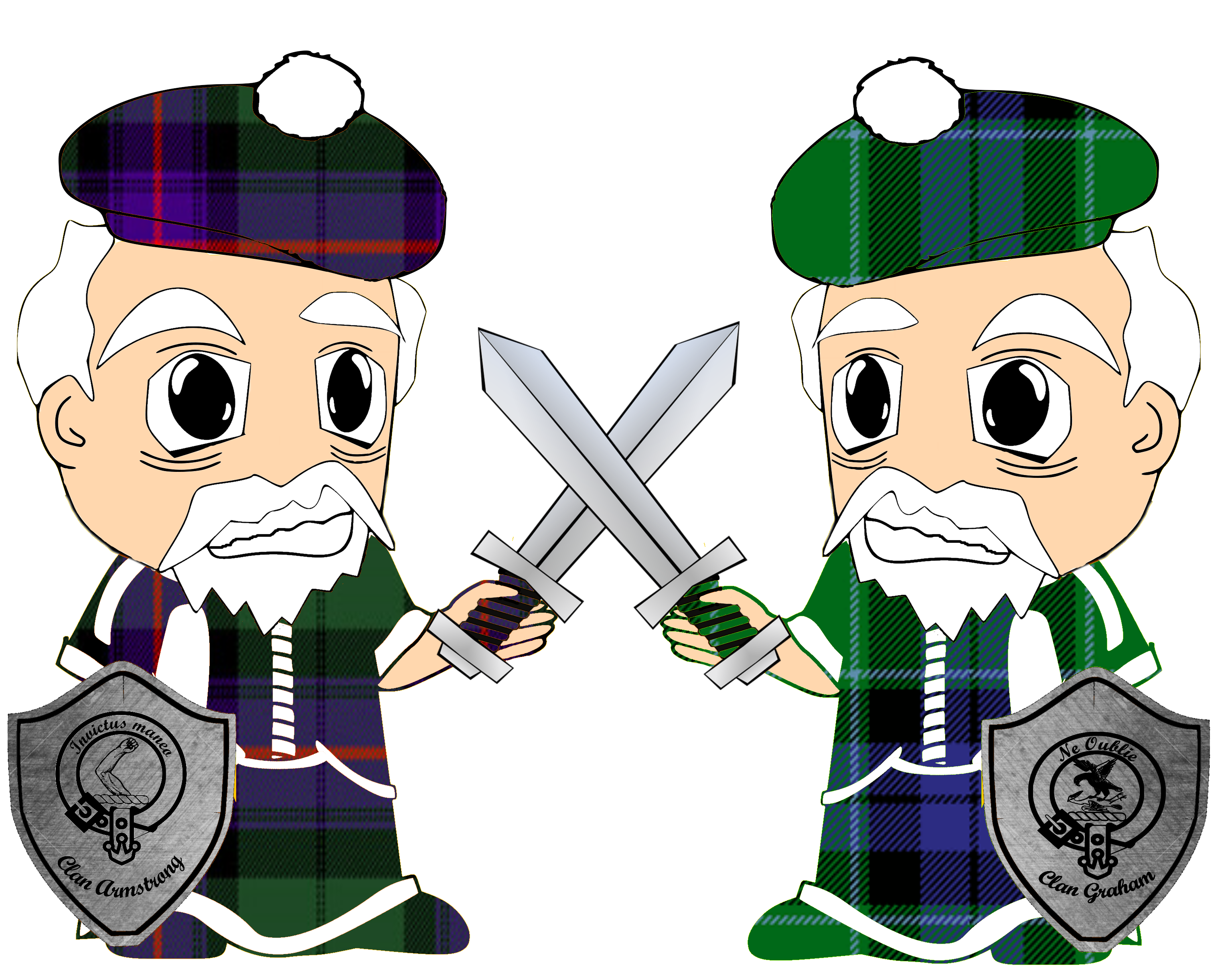 In 1530 Scottish King James the V, after having trouble with the Armstrong Clan, began to push them off their traditional lands in Gilnockie. The Armstrongs exiled themselves to nearby already over-crowded lands controlled by the powerful Graham Clan. This displacement of the Armstrong’s onto Graham property began to cause tensions between the two families. On May 29th 1541 a group of clansmen from Clan Graham led by Lang Will Graham and believed to consist of more than 50 men, surrounded and murdered three Armstrong brothers. A week later Lang Graham arrived at a day of truce organized by the Scottish West March Warden, Lord Maxwell. Lord Maxwell requested that the Graham’s make amends for their attack on Armstrong Clansmen, they refused and were embolden to begin a series of further raids in the Scottish West March. These raids took place through the summer of that year with the Graham’s terrorizing villages and farms along the Scottish boarder. On July 26th, 1530 The Houses of Krikhill, Whisgillis and Stanegill belonging to the Armstrong’s were attacked by the Grahams and burned to the ground. On the 2nd of September of the same year, the Armstrong’s and other victims of the Grahams raids, through, Lord Maxwell, made an appeal to the Scottish and English Crown’s for help but these requests went unanswered.
 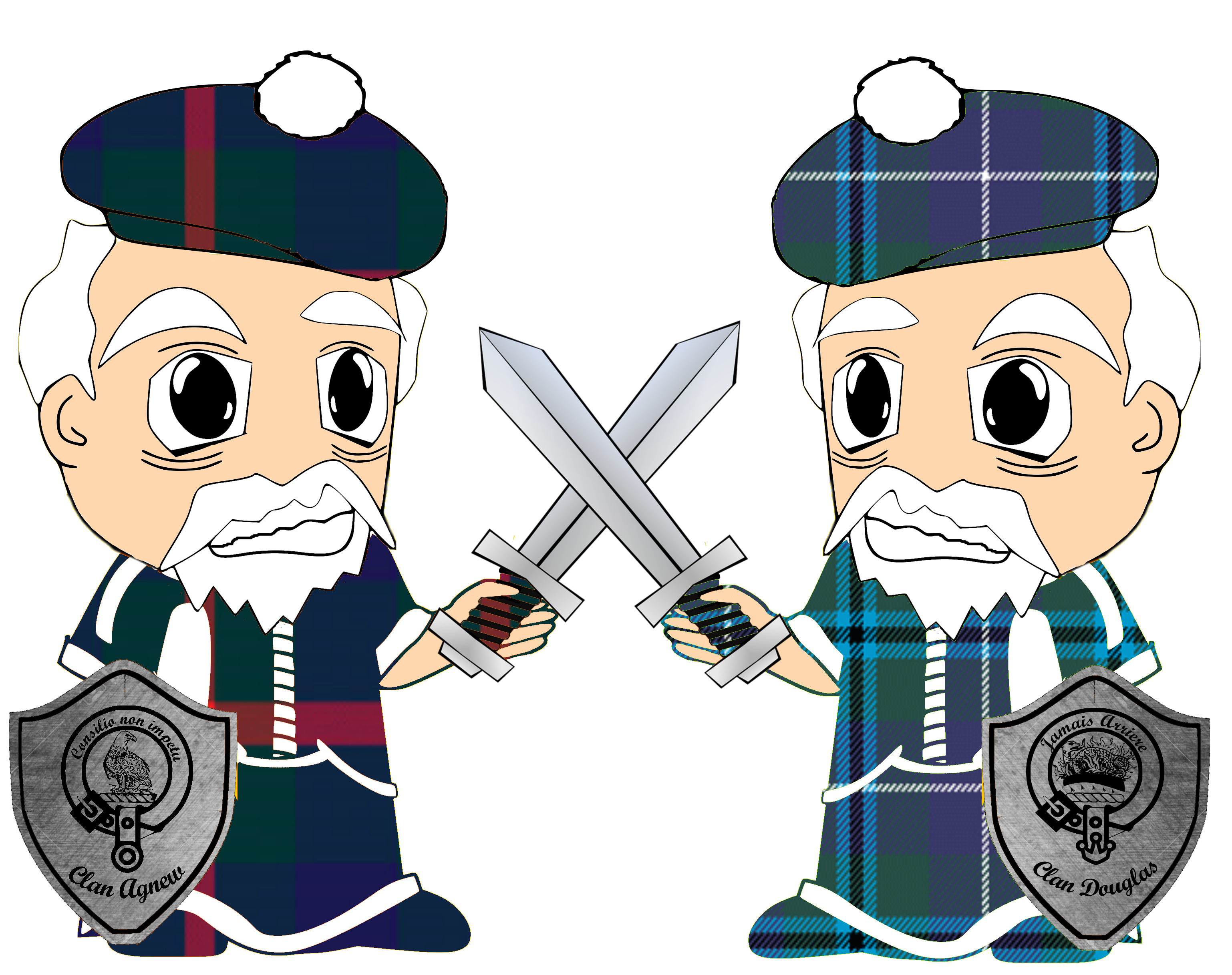 The Agnews obtained regional power in 1363, during the reign of David II when their young chief was appointed constable at the Kings Castle in Lochnaw. The Agnew’s were given the task of evicting the previous constable, the chief of Clan MacClellan, who had refused to leave. The Agnew’s tricked the MacClellans into abandoning the castle by using a hanging man as a diversion. When the MacClellan’s became curious and left the castle to check out the swinging body, the Agnews pounced and subdued them and occupied the castle.
 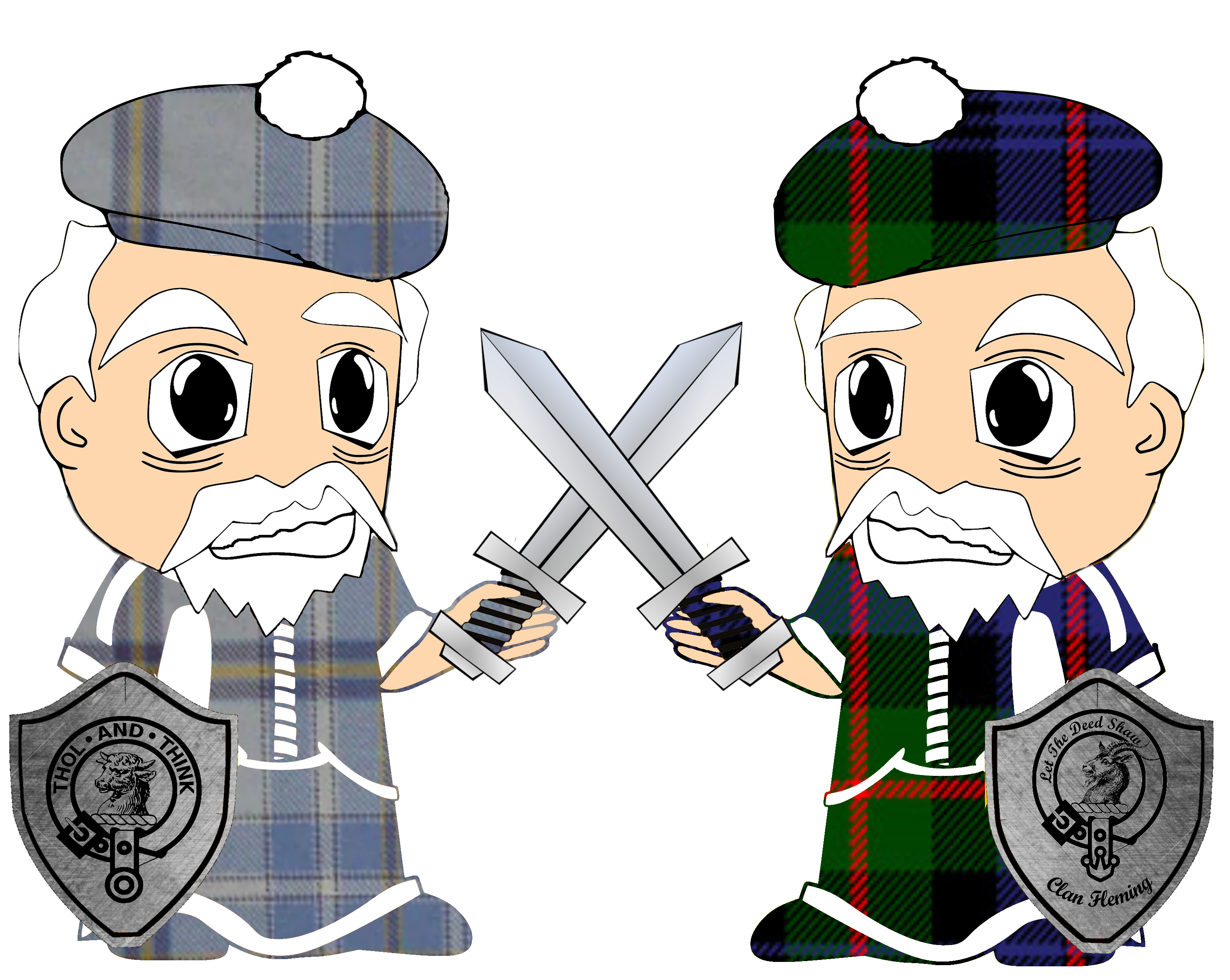 The feud between the Flemings of Biggar and the Tweedies of Drummelzier began over the proposed marriage of Catherine Eraser. Catherine was the heiress of Sir Simon Eraser, head of an old family that held large estates in the Upper part of Tweeddale. The chief of Clan Fleming was hoping to gain control of these estates by getting Catherine to marry one of his illegitimate sons. The Tweedies were intent on Catherine Fraser marrying James Tweedie who at the time was the nephew of the Tweedie chief giving the Tweedies control of these estates.
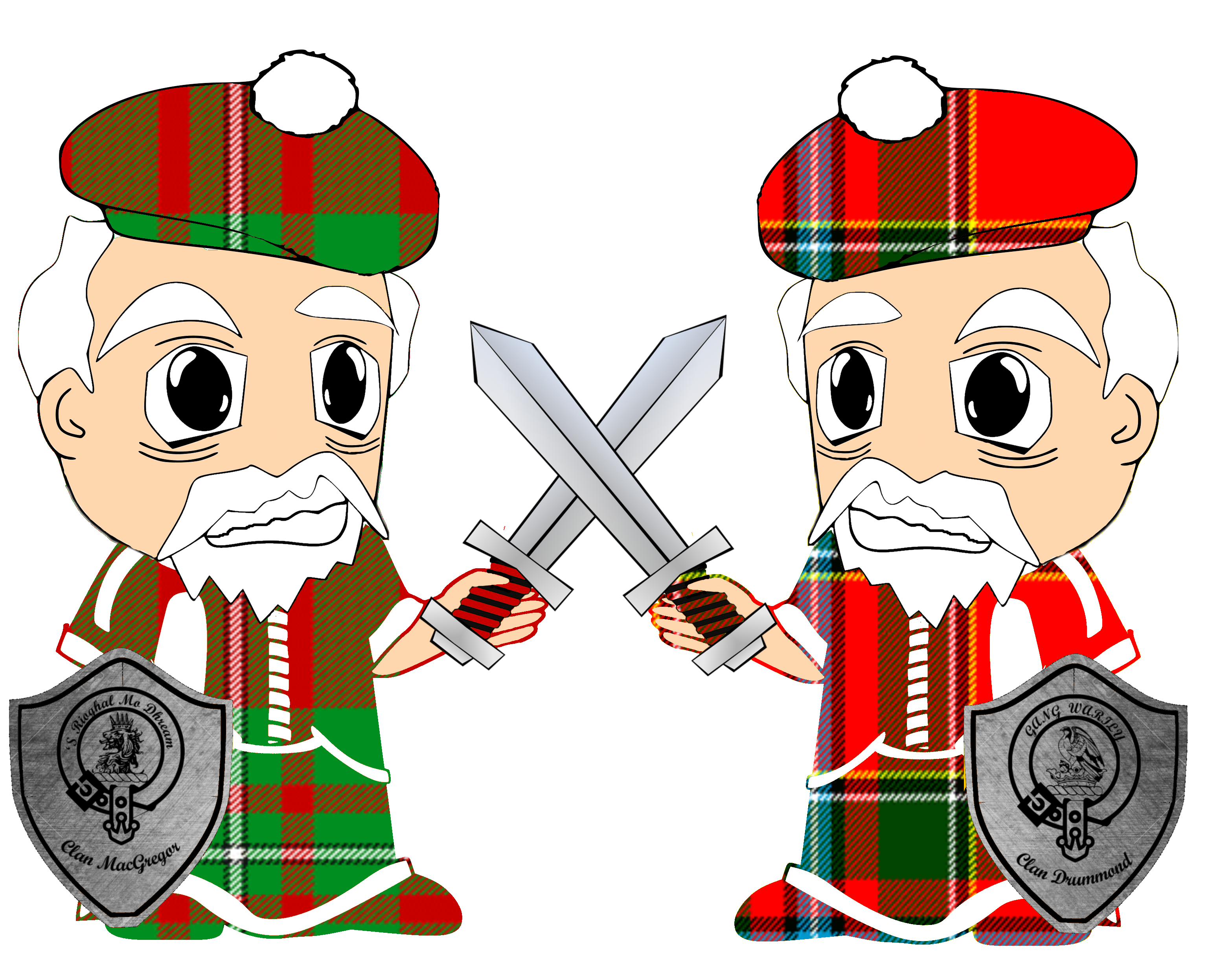 cotland. He was responsible for policing the forest and as part of his occupation, he came in contact with a group of MacGregors known as the MacEagh, or “Children of the Mist”. His various run ins with this group led to several hangings of the MacEagh’s due to infractions or crimes taking place in Glenarty Forest. This small band of young MacGregors became fed up with John Drummond-Ernoch and ambushed him while he was attending to his duties. They cut off his head, wrapped it in a plaid and carried it off as a trophy. The group then made its way to the House of Ardvoirlich and demanded hospitality from the lady of the house, Margaret, who happened to be John Drummond-Ernoch’s pregnant sister. Too afraid to refused she went to the kitchen to prepare a meal for the MacGregor men. While she was gone they placed her brother’s head upon the table and filled the mouth with bread and in jest, encouraged it to eat. When the lady of the house returned she shreaked in horror and fled to the woods. Tradition states that she wandered the woods for several weeks as a raving maniac until her husband, Laird Alexander Stewart, was able to find her and coax her home. The band of MacGregor’s left Ardvoirlich House and took the head to the Old Church in Balquhidder where they presented it to the Chief and their Clansmen. Each Clansmen took a turn approaching the head, putting their hands on it and swearing an oath to protect the men who had slain John Drummond-Ernoch.
  In 1498 the heir of the Calder Clan, John Calder died leaving two daughters and no sons, John’s father and the current chief of the time had requested a royal charter to make John his successor over his other older male children. The chiefs other sons were naturally upset, realizing that upon the chief’s death the chiefship of Clan Calder and the title Thane of Cawdor would pass to John’s daughter, the chief’s granddaughter, Muriel. Muriel’s maternal grandfather was the chief of Clan Rose of Kilravrock, he had gotten into some financial troubles with Archibald Campbell the Chief of Clan Campbell. In leu of payment Kilravrock agreed to grant his granddaughter Muriel, in marriage, to Argyll’s third son John Campbell. This would give the Campbell’s legal ownership over Caldwell lands once the current Thane of Calder passed. On January 16, 1495 a ward of marriage was granted to Argyll by the crown and Kilravrock agreed to keep Muriel at Kilravrock Castle until she came of age.
  The Mackinnon and the Maclean Clans began the 15th century as allies, this was shown after the death of John, the Lord of the Isles, when the MacKinnon’s joined forces with the MacLean’s and the MacLeod’s in an unsuccessful attempt to overthrow the MacDonald Clan’s grasp on the Scottish Western Isles. The Mackinnon leader was put to death but the MacLean’s escaped penalty and began to have increasing influence over the island of Mull. This increased power created a rivalry between these two clans. In 1400 Hector and his brother Lubanach Maclean, the chief of Clan Maclain, joined the chief of Clan MacKinnon on a hunting trip in Mull, they were also accompanied by the lord of the Isles who was visiting. While the Lord of the Isles had left in his ship to head back to Ardtornish Castle, Mackinnon stepped on his galley to follow. Lachlan and Hector MacLean approached Mackinnon, stabbed him to death and disarmed his men, they seized the Mackinnon’s ship and tracked down the Lord of the Isle’s galley, seized it and held the Lord for ransom.
 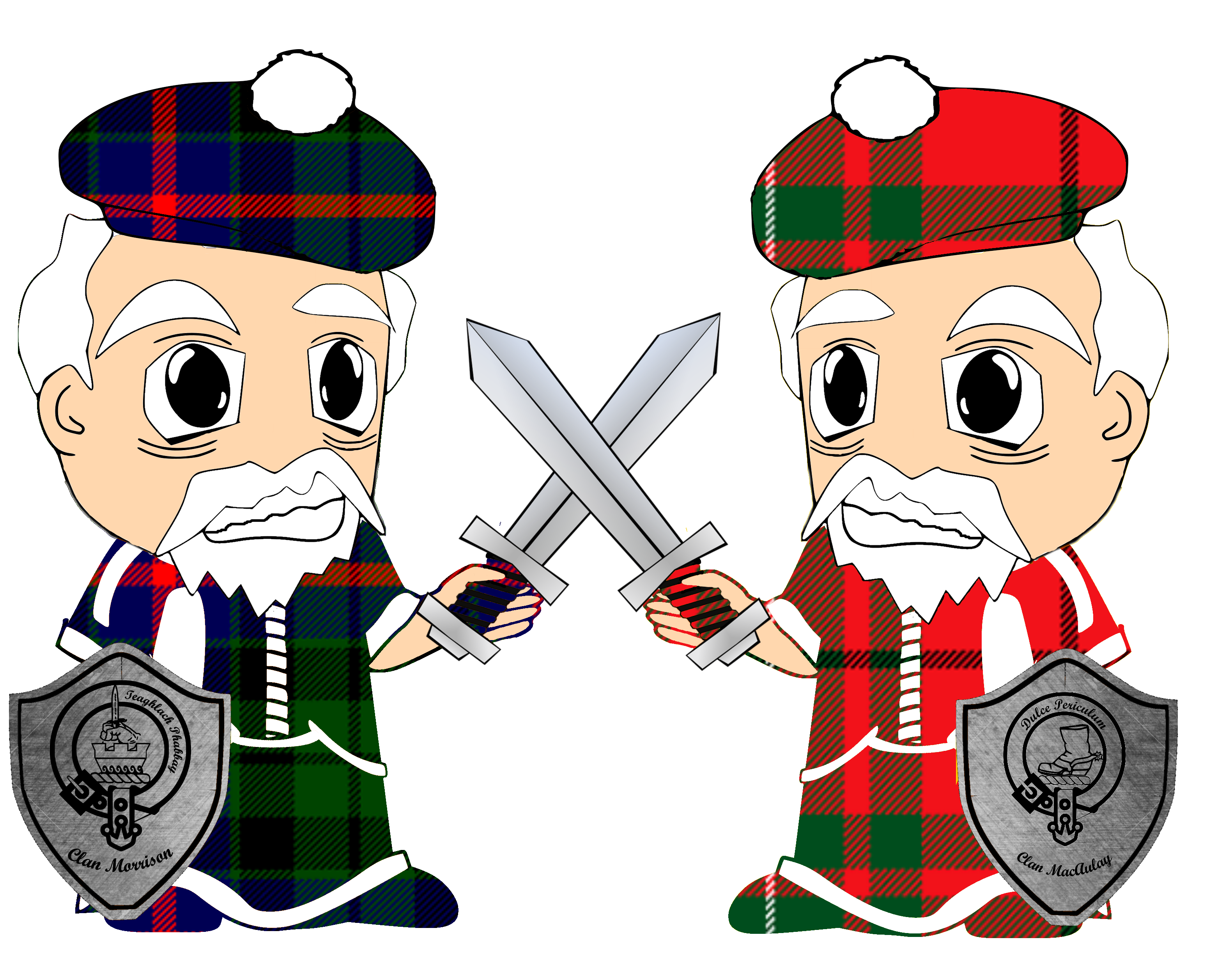 In 1493 the Scottish Crown was able to wrestle control of the Western Isles of Scotland from the Lord of the Isles. The Crown was in no position to establish royal justice in the area and this led to two centuries of unrest between the clans. One of these feuds took place on the Isle of Lewis, located in the outer Hebrides, between Clan Morrison and Clan MacAulay. It began in the early 16th century with the murder of Donald Ban Morrison, brother of the Morrison chief, John Morrison, by members of the MacAaulay Clan. John retaliated by sending his clansmen to raid Uig, the MacAulay’s stronghold. The MacAulay chief, hearing about the raid appealed to their allied clan, the very powerful MacLeods of Lewis. The MacAulay and MacLeods men met the Morrison’s in battle at the Caws of Tarbert where the Morrison’s were soundly defeated.
  The clan of Elliot, occupied a considerable portion of Upper Liddesdale, and also lands in Ewesdale and Teviotdale. In early 1564 a member of the Scott’s Clan of Teviodale, David Scott, was murdered by a band of Eliott men. The group was led by William Eliott, the illegitimate nephew of Robert Elliot of Redbeuch, chief of the clan. This event sparked a bloody feud between the two clans. The Scott’s and Eliott’s feuded daily until the Lords of the Council in Scotland decided to step in. On October 21st, 1564, five clansmen, four of clan Eliott and one of Clan Scott, where tried by the courts in Edinburgh. Three of the accused were sentenced to death, while William Elliot was banished from Teviotdale. The three convicted clansmen were beheaded by torchlight on the Castle Hill of Edinburgh that same evening.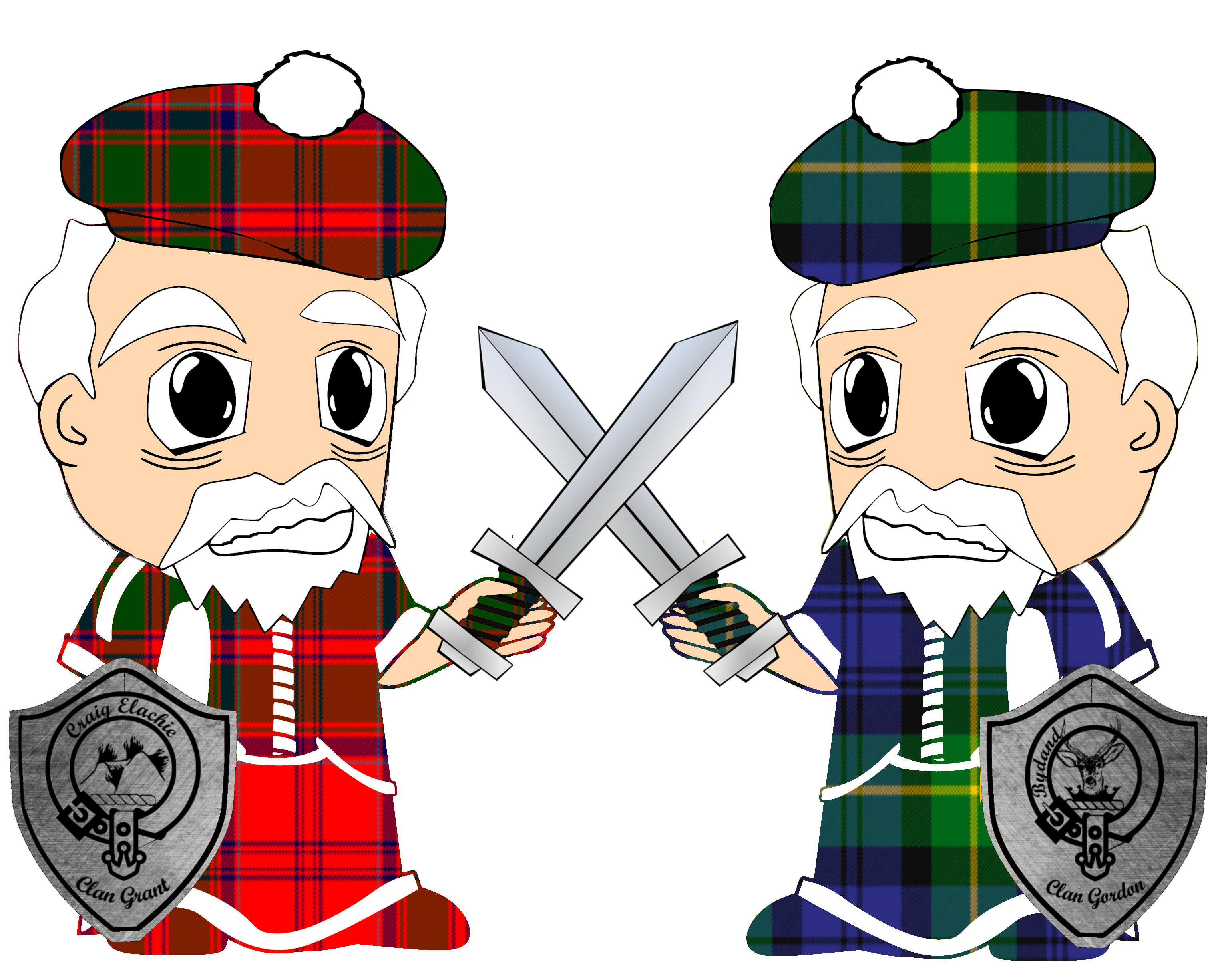
 In 1575 a band of MacIver clansmen, who had resided previously in the Argyll district of Scotland, under the leadership of two brothers, Kenneth Beuy MacIver and Farquhar MacIver, relocated to Caithness in the north of Scotland. After they arrived, George Sinclair, the Earl of Caithness, recognized that this band of immigrants was much more suited to predatory warfare then his own men, and employed them to help in the Sinclair’s blood feud against Clan Sutherland. The MacIver’s became natural enemies with Clan Gunn who were also considered a fierce and warlike race. The Gunn’s under the leadership of their chief, MacHamish Gunn, were allied with the Sutherlands and guarded the boarder of their territory.
  The feuding between these clans began in 1590 when members of the MacFarlane Clan started raiding the Glens of Luss, which was Clan Colquhoun territory. They would steal livestock and property from them and return back to their own lands. At first, the MacFarlane’s were able to carry on these raids with very little resistance from the Colquhoun’s. This all changed with the Bannachra raid of 1592.
  In 1501 William Munro of Foulis was knighted by James IV of Scotland and began to assist the king in public affairs in the Scottish Highlands. It is believed that William Munro was instructed to lead a force against Clan Mackenzie as part of his official duties. The Mackenzie chief, Hector Roy Mackenzie was considered obnoxious to the government and a “disturber of the public peace”, this may have been the motivation for the ordered attack. Along with members of Clan Munro, William gathered a force of up to 900 men, this also included members of the Dingwall Clan and the MacCulloch Clan. This force attacked the Mackenzie’s, destroyed their property and seized a large number of their cattle.
 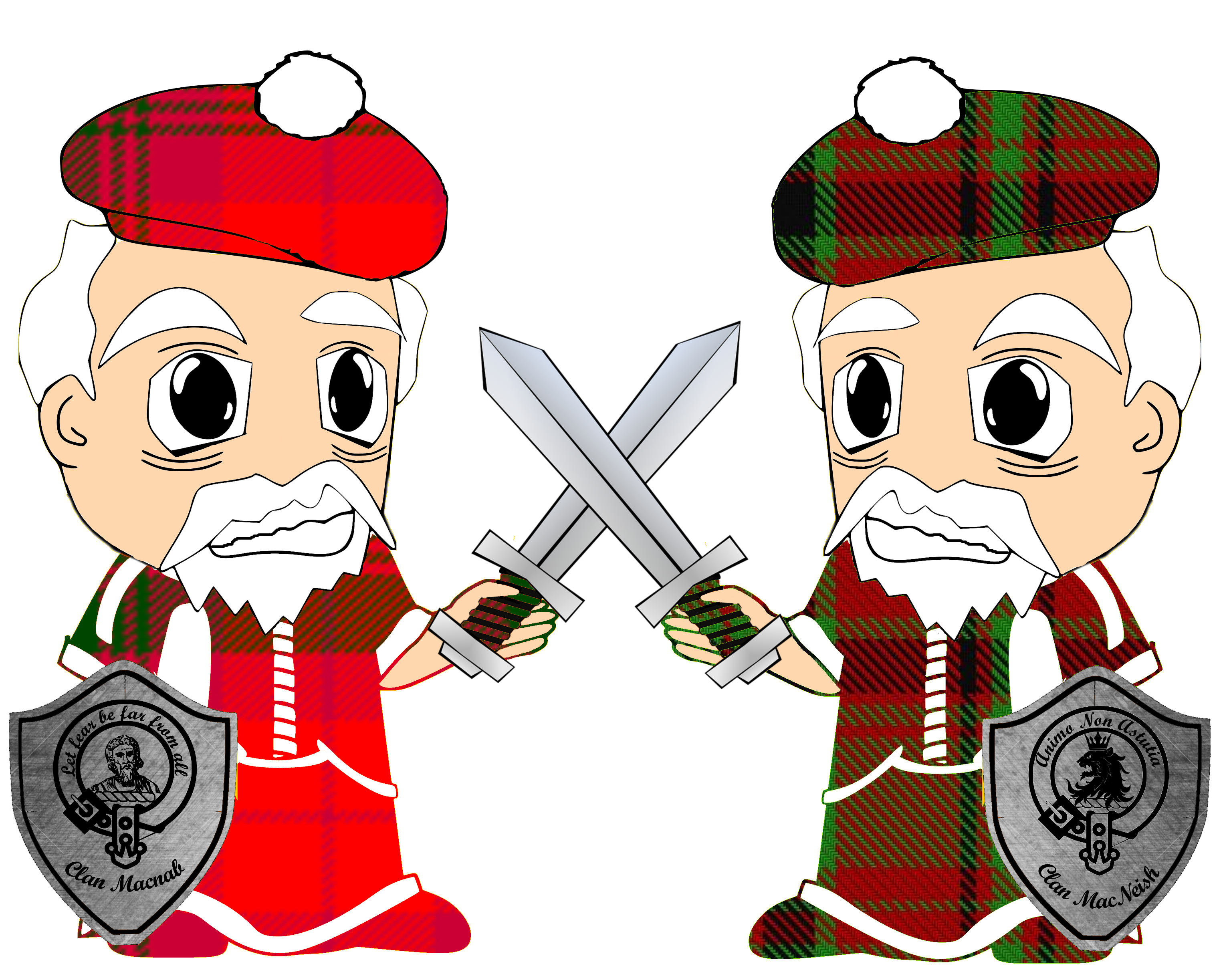 This feud most likely began due to the fact that the MacNeishes were known to be predatory raiders that harassed neighboring clans from their stronghold, Loch Earn Castle on the small island of Neish, located in Loch Earn Scotland. At one point their raiding became so destructive that James IV ordered Lord Drummond to destroy their homestead and confiscate the MacNeishes boat and move it to the Western isle, away from the MacNeishes. This temporarily curbed their raiding but they were able to quickly rebuild and continue once they recovered their boat.